
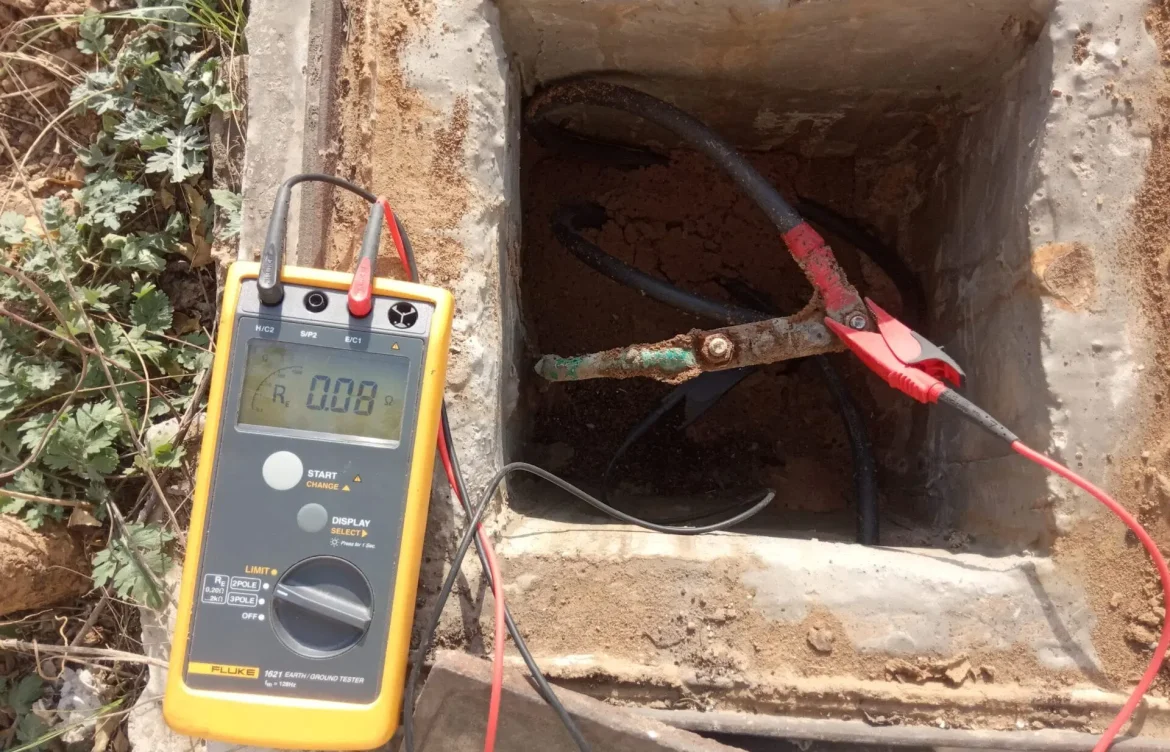
Testing of Earth Pit: Ensuring Electrical Safety and System Reliability
Introduction
An earth pit plays a critical role in electrical safety by providing a safe path for fault currents to flow into the ground. However, the effectiveness of an earth pit can reduce over time due to environmental factors, corrosion, or changes in soil conditions.
Regular earth pit testing is therefore essential to ensure that the earthing system continues to function properly and maintains a low-resistance path for electrical faults. Proper testing helps protect people, electrical equipment, and infrastructure from potential hazards.
What Is Earth Pit Testing?
Earth pit testing is the process of measuring the earth resistance between the earthing electrode and the surrounding soil. This test helps determine whether the earthing system is capable of safely dissipating fault currents into the ground.
A well-maintained earth pit should provide low resistance, allowing electrical faults or lightning currents to pass safely into the earth without creating dangerous voltage levels.
If the resistance becomes too high, the earthing system may fail to protect equipment and personnel effectively.
Why Earth Pit Testing Is Necessary
Regular testing of earth pits is essential for maintaining electrical safety and system reliability.
Key reasons include:
- Preventing electric shock hazards by ensuring safe fault current dissipation
- Ensuring proper operation of protective devices such as circuit breakers and relays
- Reducing the risk of electrical fires caused by faulty grounding
- Protecting sensitive electrical equipment from damage
- Meeting safety audit and regulatory requirements
An earth pit may appear physically intact, but without proper testing, its electrical performance cannot be guaranteed.
When Should Earth Pit Testing Be Done?
Earth pit testing should be conducted at different stages of an electrical system’s lifecycle to ensure continuous safety.
Recommended testing times include:
- During the initial installation of the earthing system
- After major electrical system modifications
- Following lightning strikes or fault events
- Before statutory inspections or safety audits
- Periodically every 6–12 months depending on site conditions
Regular monitoring ensures that any issues with the earthing system are detected and corrected early.
Methods of Earth Pit Testing
Several standard methods are used to measure earth resistance depending on the site conditions and the type of electrical installation.
1. Fall of Potential Method
This is one of the most widely used and accurate methods. It involves placing auxiliary electrodes in the ground and measuring voltage and current to calculate earth resistance.
2. Clamp-On Earth Resistance Testing
This method allows technicians to measure earth resistance without disconnecting the grounding system. It is useful in complex or interconnected grounding networks.
3. Loop Impedance Testing
Loop impedance testing measures the total resistance of the fault current path and helps verify whether the grounding system can safely carry fault currents.
Each method provides valuable data for evaluating the health and effectiveness of an earthing system.
Common Problems Found During Testing
Earth pit testing often reveals issues that may affect grounding performance.
Common problems include:
- High earth resistance
- Loose or damaged connections
- Corrosion of earthing electrodes
- Dry or high-resistivity soil
- Seasonal variation in soil moisture
- Improper installation of grounding components
Identifying these problems early allows maintenance teams to take corrective actions before serious electrical hazards occur.
How to Fix High Earth Resistance
High earth resistance is a common issue, particularly in dry or rocky soil conditions. Traditionally, this required rebuilding or redesigning the earth pit.
However, modern solutions allow resistance to be improved without major reconstruction. Earthing enhancement materials such as Control-R Gel help improve soil conductivity around the electrode. These compounds maintain moisture, reduce soil resistivity, and provide a stable conductive path for electrical current.
Using such solutions can significantly improve grounding performance and extend the life of an existing earthing system.
Conclusion
Earth pit testing is a vital practice for ensuring electrical safety and maintaining the reliability of grounding systems. Regular testing helps detect hidden problems, maintain low earth resistance, and ensure that protective systems function correctly.
By implementing routine testing procedures and using effective grounding enhancement solutions when required, organizations can maintain safe and efficient electrical installations for the long term.